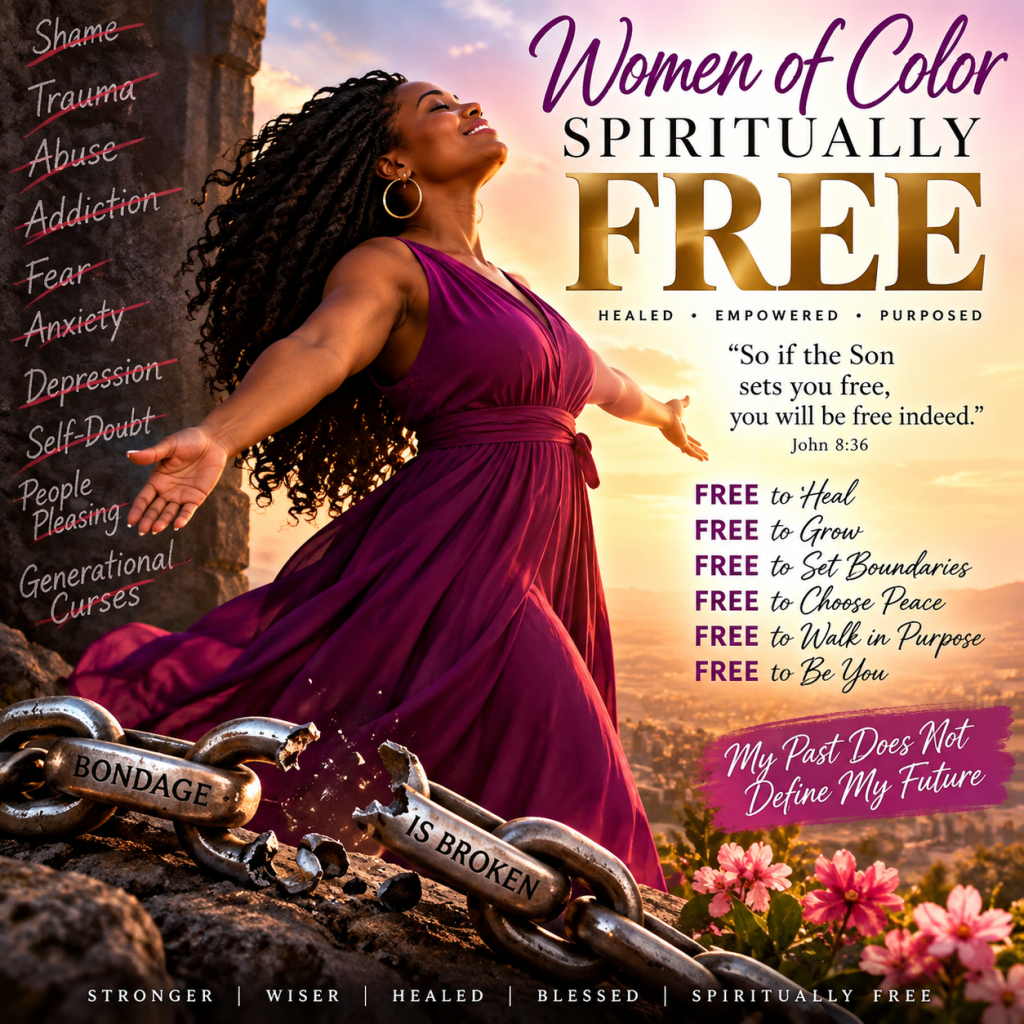
When God Breaks the Strongholds That Kept You Bound
“So if the Son sets you free, you will be free indeed.” — John 8:36
There are some battles people can see, and there are others that happen silently.
Some strongholds look like addiction. Others look like trauma, fear, shame, depression, anxiety, abusive relationships, destructive patterns, unforgiveness, self-hatred, or wounds from a past that refuses to stay in the past.
You can smile while struggling.
You can go to work while struggling.
You can take care of everyone else while struggling.
You can even pray, attend church, encourage other people, and still have areas of your life where you desperately need healing and freedom.
But being bound is not the end of your story.
There is life beyond the stronghold.
There is purpose beyond the pain.
There is healing beyond what happened to you.
There is recovery beyond addiction.
There is hope beyond the darkest season of your life.
And there is freedom on the other side of what once held you captive.
What Is a Stronghold?
A stronghold can be understood as something that gains such a powerful influence in our lives that it begins affecting how we think, feel, respond, relate to others, and see ourselves.
Sometimes strongholds develop through choices and behaviors. Sometimes they are connected to painful experiences we never asked for. Sometimes trauma changes the way we respond to danger, relationships, rejection, and uncertainty.
Whatever its origin, a stronghold can eventually make captivity feel normal.
You may start saying:
“This is just who I am.”
“I will always be this way.”
“I will never recover.”
“I will never trust again.”
“I cannot live without this substance.”
“I am too damaged to be loved.”
“My past ruined my future.”
But those thoughts do not have to write the final chapter of your life.
2 Corinthians 10:4 reminds us:
“For the weapons of our warfare are not carnal, but mighty through God to the pulling down of strong holds.”
God can help us confront what has taken up too much space in our hearts and minds.
Delivered From Addiction
Addiction can become a powerful form of bondage. What may begin as an attempt to escape pain, cope with trauma, numb emotions, or experience temporary relief can eventually take control.
Addiction can affect health, relationships, finances, employment, parenting, self-esteem, spirituality, and hope.
But addiction does not cancel a person’s worth.
Recovery is possible.
For some people, God’s work in recovery includes prayer, repentance, spiritual community, and a dramatic turning point. For others, freedom unfolds through treatment, counseling, medication when appropriate, recovery programs, peer support, accountability, healthy relationships, and daily choices—alongside their faith.
Seeking help is not evidence that your faith is weak.
Sometimes the answer to prayer includes the courage to walk into a treatment center.
Sometimes it includes calling a counselor.
Sometimes it means attending the meeting.
Sometimes it means taking recovery one day—or one hour—at a time.
Sometimes deliverance is instantaneous, and sometimes freedom is a journey in which God strengthens you with every step.
Do not despise gradual progress simply because you wanted an immediate miracle.
“It is for freedom that Christ has set us free.” — Galatians 5:1
Delivered From the Grip of Trauma
Trauma can leave wounds that no one else can see.
A person can physically survive something while continuing to carry its emotional consequences for years.
You may have survived childhood trauma, abandonment, violence, neglect, loss, betrayal, sexual abuse, domestic violence, or another experience that changed how safe the world feels.
Trauma may leave you hypervigilant, fearful, angry, disconnected, ashamed, or constantly preparing for something bad to happen.
Healing does not require pretending those experiences never happened.
Freedom means your past no longer gets unlimited authority over your present.
You can remember without being controlled by the memory.
You can acknowledge what happened without allowing it to define your identity.
You can learn that boundaries are not cruelty.
You can discover that love does not have to hurt.
You can experience relationships without constantly expecting abandonment.
You can begin feeling safe in places where your nervous system once expected danger.
Healing may involve prayer and spiritual support, and it may also involve trauma-informed therapy and other professional resources.
God can meet you in all of it.
Faith, Mental Illness, and Freedom
Mental illness should never automatically be treated as evidence of spiritual failure, demonic influence, insufficient prayer, or weak faith.
People of deep faith can experience depression, anxiety, bipolar disorder, PTSD, OCD, and other mental health conditions.
Prayer can be powerful.
Scripture can provide hope.
Community can provide encouragement.
And therapy, medication, psychiatric care, crisis services, and other evidence-based treatments can also be important parts of someone’s healing and stability.
Faith and treatment do not have to compete.
For some people, freedom does not mean they never experience another symptom. Freedom may mean symptoms no longer determine their identity, destroy their hope, or prevent them from pursuing a meaningful life.
You can love God and see a therapist.
You can pray and take prescribed medication.
You can believe in miracles and follow a treatment plan.
You can have faith while acknowledging that today is difficult.
Your diagnosis may describe something you experience, but it does not contain the entirety of who you are.
You are still a person with dignity, purpose, gifts, dreams, and value.
Delivered From Abuse
Abuse creates chains that can remain long after the abusive moment ends.
Fear.
Shame.
Self-blame.
People-pleasing.
Difficulty trusting.
Feeling responsible for other people’s emotions.
Believing you deserve mistreatment.
Confusing control with love.
But freedom teaches you something different:
Love does not require you to surrender your safety.
Forgiveness does not mean giving an unsafe person unlimited access to you.
Faith does not require remaining in an abusive situation.
Boundaries can be necessary.
Distance can be necessary.
Safety can be necessary.
Professional and legal support can be necessary.
You are allowed to build a life where peace is no longer constantly interrupted by someone else’s harmful behavior.
Breaking the Stronghold of Shame
One of the strongest chains is shame.
Shame whispers:
“Look at what you did.”
“Look at what happened to you.”
“Look how many times you went back.”
“Look how many times you relapsed.”
“Look how long you stayed.”
“Look at all the mistakes you made.”
But grace says:
Look at how far God can still take you.
Romans 8:1 declares:
“There is therefore now no condemnation to them which are in Christ Jesus.”
Conviction can lead us toward change.
Shame tries to convince us that change is impossible because we are the problem.
There is a difference between saying, “I made choices I regret,” and saying, “I am nothing but my mistakes.”
Your worst chapter does not deserve naming rights over your entire story.
What Freedom Can Look Like
Freedom does not always arrive with fireworks.
Sometimes freedom looks surprisingly ordinary.
It is waking up and realizing you no longer crave the chaos that once felt familiar.
It is deleting the number.
It is going to therapy.
It is entering treatment.
It is choosing sobriety today.
It is finally saying no without writing an essay explaining why.
It is setting a boundary without feeling guilty for protecting your peace.
It is realizing that you do not have to respond to every accusation.
It is crying and realizing those tears are no longer tears of hopelessness—they are tears of release.
It is recognizing a trigger before reacting to it.
It is asking for help before reaching the breaking point.
It is replacing isolation with community.
It is forgiving yourself for not knowing then what you know now.
It is discovering that peace feels unfamiliar only because chaos was familiar for so long.
That is what freedom can do.
Freedom Changes Your Identity
Strongholds have a way of naming us.
Addict.
Victim.
Damaged.
Crazy.
Failure.
Unlovable.
Hopeless.
But freedom asks a different question:
Who are you becoming?
You may have experienced addiction, but addiction does not have to own your future.
You may have survived abuse, but abuse does not get to define your worth.
You may live with a mental health condition, but a diagnosis is not your entire identity.
You may carry scars from trauma, but scars are evidence that a wound existed—not proof that the wound is still open.
Your story can move from surviving to living.
From bondage to freedom.
From shame to grace.
From isolation to connection.
From hopelessness to expectation.
From merely getting through another day to discovering why you are still here.
Freedom Changes Relationships
When healing begins, relationships often change too.
You begin recognizing the difference between love and control.
You stop chasing people who consistently reject you.
You stop confusing familiarity with safety.
You stop believing you must destroy yourself to keep everyone else comfortable.
Healthy boundaries become possible.
Healthy love becomes recognizable.
You learn that people who genuinely love you can respect your “no.”
And sometimes freedom means grieving relationships that cannot follow you into the life you are building.
That grief can hurt.
But losing chaos is not the same as losing your purpose.
Freedom Can Change Generations
Your healing may reach further than you realize.
When you confront addiction, you can interrupt patterns that might otherwise continue through your family.
When you heal from trauma, you can learn healthier ways of responding to your children and loved ones.
When you seek mental health treatment, you can help remove shame from asking for help.
When you leave abuse and establish healthy boundaries, you demonstrate that mistreatment is not the price of love.
When you tell the truth about your journey, somebody else may finally find the courage to tell the truth about theirs.
Your freedom can become someone else’s evidence that change is possible.
The cycle can stop.
A new pattern can begin.
Freedom Requires Learning How to Live Free
Getting free and learning to live free are not always the same thing.
After leaving captivity, old patterns may still call your name.
Old environments may feel comfortable.
Old relationships may try to pull you backward.
Old thoughts may return.
Triggers may still happen.
This is why maintaining freedom matters.
Stay connected to healthy people.
Continue treatment when treatment is needed.
Keep attending recovery support.
Keep praying.
Keep learning.
Keep establishing boundaries.
Keep identifying triggers.
Keep replacing destructive coping mechanisms with healthier ones.
Keep getting back up.
A difficult day does not erase your progress.
A setback does not mean the journey is over.
And if relapse occurs in addiction or symptoms return in mental health recovery, respond with support and appropriate care rather than shame.
Freedom is worth protecting.
Your Chains Do Not Get the Final Word
Maybe you are reading this while still fighting.
Maybe the addiction has not completely loosened its grip.
Maybe the trauma still wakes you at night.
Maybe your mind feels exhausted.
Maybe you are trying to find the courage to leave an abusive environment.
Maybe you have prayed for freedom so many times that you are beginning to wonder whether anything will ever change.
Please remember:
The chapter called “bound” does not have to be the chapter where your story ends.
You may need help.
You may need treatment.
You may need counseling.
You may need medication.
You may need recovery support.
You may need a safety plan.
You may need boundaries.
You may need to separate yourself from people and environments that continually pull you backward.
And through every step, you can continue bringing your heart before God.
A Declaration of Freedom
Today, I refuse to believe that what held me yesterday must control my tomorrow.
I am more than my trauma.
I am more than my mistakes.
I am more than an addiction.
I am more than what someone did to me.
I am more than a diagnosis.
I am more than the shame I carried.
I am more than the season that nearly destroyed me.
I am healing.
I am growing.
I am recovering.
I am learning.
I am rebuilding.
I am becoming.
And by the grace of God, I am walking toward freedom.
Prayer for Deliverance and Freedom
Heavenly Father,
I bring before You every area of my life that feels bound.
I bring You the addiction, trauma, fear, painful memories, shame, unhealthy relationships, destructive habits, and thoughts that have tried to convince me that freedom is impossible.
Give me courage to face what I have avoided.
Give me wisdom to recognize what needs to change.
Give me strength to walk away from what is destroying me.
Lead me toward safe people, effective treatment, healthy community, wise counsel, and the resources I need.
Help me understand that asking for help is not defeat.
Teach me how to live differently—not only how to escape bondage, but how to build a life of peace, purpose, stability, and hope.
Heal the places in me that still hurt.
Renew my mind.
Restore my hope.
Strengthen me when old patterns call me backward.
Remind me that my past does not have authority over the future You are helping me build.
And as I heal, use my story to remind someone else that freedom is possible.
In Jesus’ name, Amen.
Freedom Changes Everything
Deliverance is more than escaping what held you.
It is discovering who you can become without the chains.
It is waking up with hope.
It is rebuilding relationships.
It is recovering your voice.
It is learning to trust again.
It is choosing life instead of merely surviving.
It is discovering purpose where pain once lived.
It is turning wounds into wisdom.
It is watching God take a story that looked finished and begin writing something new.
You survived things that tried to silence you.
Now imagine what can happen when you begin living free.
The chains may have been part of your story—but they do not have to be the conclusion.
You can heal. You can recover. You can rebuild. You can walk in freedom.
“So if the Son sets you free, you will be free indeed.” — John 8:36
I can also turn this into a Resilient Inspiration version with a powerful opening, SEO title/meta description, hashtags, and a matching “Delivered: The Chains Are Broken” Christian blog image featuring broken chains, light, and African American representation.


 Resilient Inspired Spiritual Excellence R.I.S.E.